
 Add to Favorites
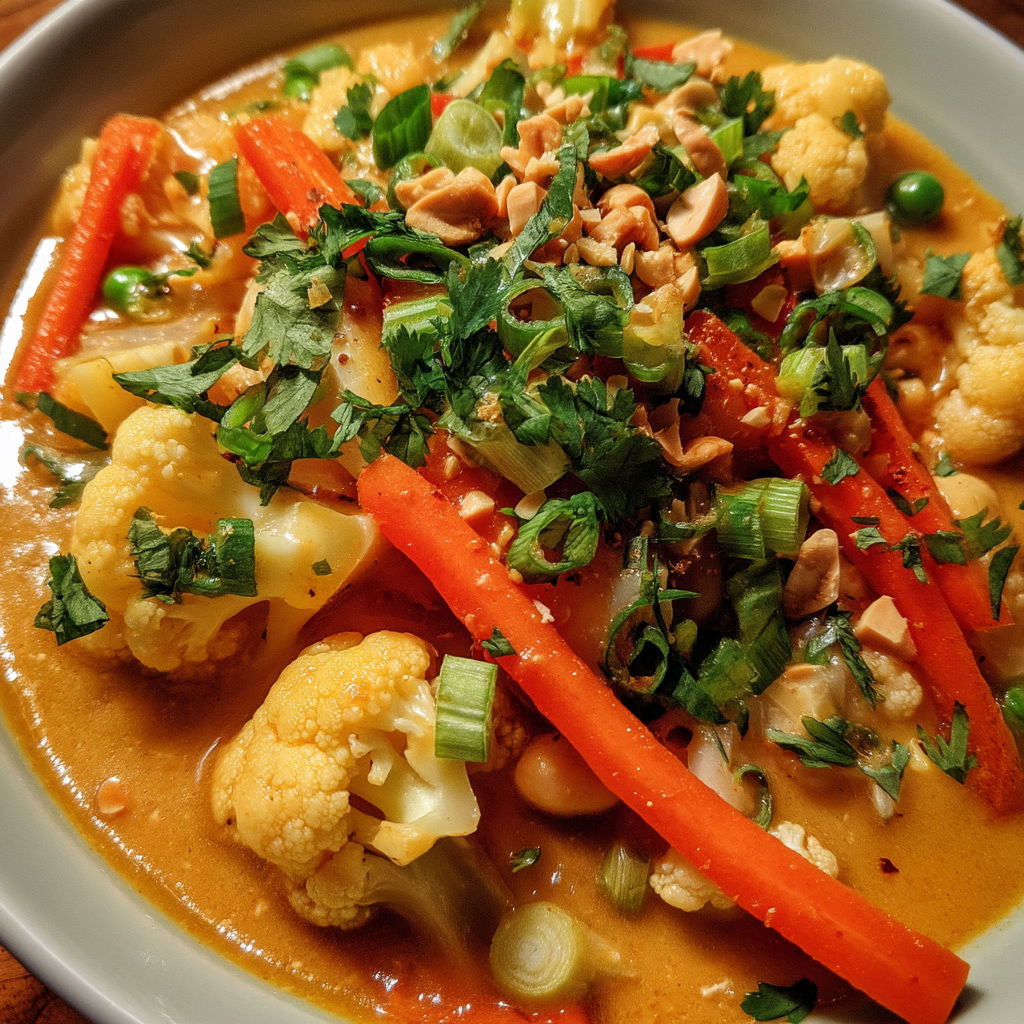
This Thai Coconut Peanut Cauliflower Curry is what I reach for when I want something rich and vibrant that checks all the boxes for comfort food but keeps it plant-based and easy. Silky coconut milk blends with nutty peanut butter and a kick of red curry paste while cauliflower, chickpeas, and a handful of veggies soak up every drop of that creamy sauce. If you love big flavors and crave a filling one-pan meal everyone can customize, this is the recipe that should be in your weeknight rotation.
I made this curry the first time for friends who were skeptical about cauliflower and now they text me photos of their own versions. Something about the peanut coconut combo turns even veggie-shy eaters into real curry fans.
What You'll Need
- Coconut oil: For sautéing and a subtle hint of sweetness
- Fresh garlic and ginger: Make the curry base bright and punchy so always use the freshest you can find
- Large carrot: For color and natural sweetness
- Small head of cauliflower: Cut into small florets, make sure your cauliflower is firm with crisp white stems
- Green onions: Add a zippy flavor and pop of color, buy a bunch with bright green tops
- Lite coconut milk: Brings the signature creamy texture, look for cans with no additives
- Vegetarian broth or water: Thins the sauce if you want a lighter curry, use broth for extra flavor
- Red curry paste: The backbone for all the aromatics and mild heat, grab a Thai-style paste with red chili as its first ingredient
- Natural peanut butter: For the richest peanut essence, avoid sweetened brands and use unsalted if you want to control sodium
- Gluten free soy sauce or coconut aminos: For a touch of depth, choose a brand with lower sodium if needed
- Ground turmeric: For golden color and a little earthiness
- Cayenne pepper: For real heat control, buy fresh so it’s punchy
- Salt: To balance and bring it all together
- Fresh red bell pepper: For bright color and crunch, pick one with glossy skin
- Canned chickpeas: For protein and creaminess, always rinse and drain very well
- Frozen peas: For gentle sweetness and vibrant green color
- Garnish: Fresh cilantro, extra green onion, and chopped peanuts or cashews for a nutty crunch and fresh finish. Choose cilantro with bright green leaves and nuts that are raw or only lightly roasted
How to Make It
- Prepare the Aromatics:
- In a large pot melt the coconut oil over medium heat then add the minced garlic grated ginger and sliced carrot. Gently cook these for five to seven minutes stirring often until the mixture smells fragrant and the carrots have started to soften. This is crucial for creating a flavor-packed base that does not taste raw.
- Layer in the Core Ingredients:
- To your pot add the cauliflower florets green onions coconut milk water or broth red curry paste peanut butter soy sauce turmeric cayenne and salt. Stir very well to blend the flavors and coat the cauliflower evenly. The paste and peanut butter may take a minute to fully dissolve so be patient.
- Simmer Everything Together:
- Once the sauce is smooth add the julienned red pepper chickpeas and frozen peas. Bring the mixture up to a gentle boil then reduce the heat to low and cover. Simmer for about fifteen minutes or until the cauliflower is fork tender and the sauce has thickened. Stir once or twice so nothing catches at the bottom.
- Finish and Garnish:
- Turn off the heat. When ready to serve ladle the curry into bowls and top each serving with a generous handful of fresh cilantro extra diced green onion and a sprinkle of chopped peanuts or cashews. This step adds fresh contrast and crunch that makes every bite a little different.
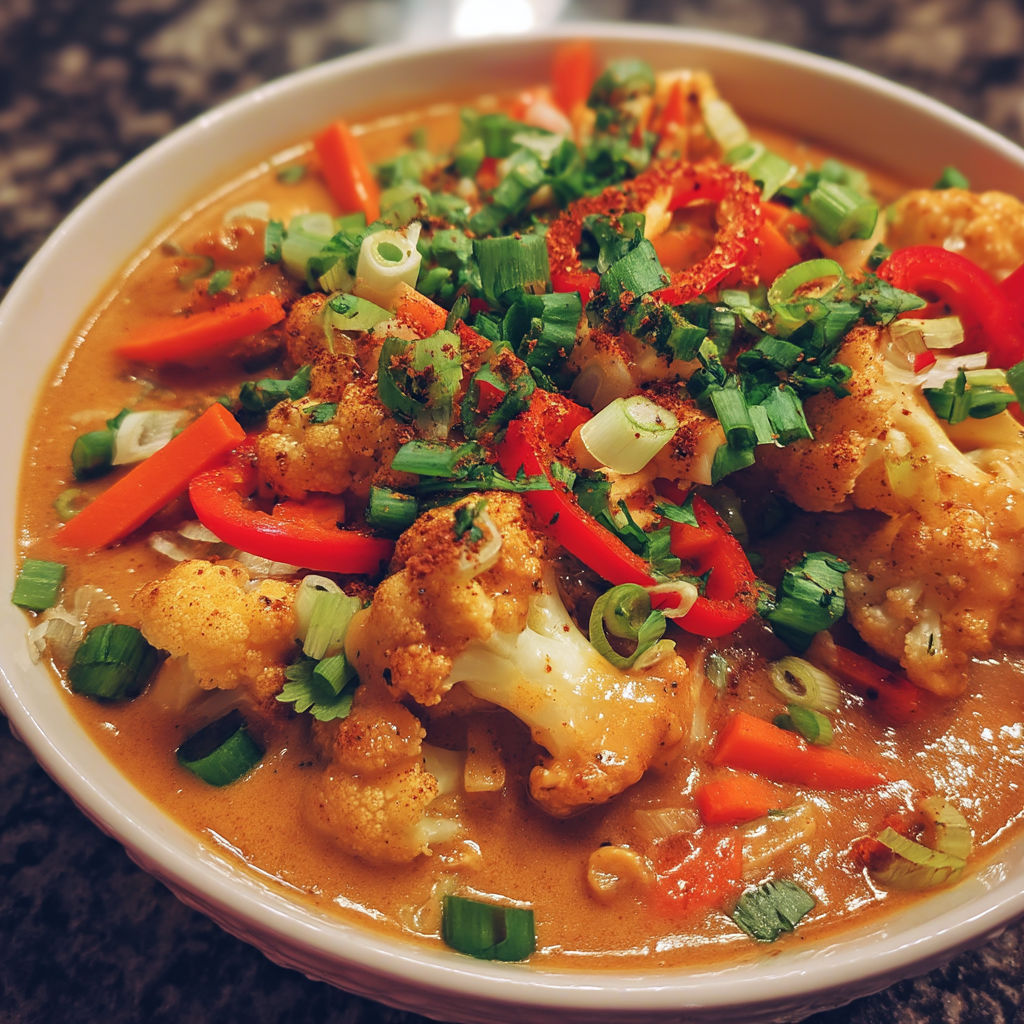
The first time I brought leftovers to work a colleague actually followed me into the breakroom to ask for the recipe. The red curry paste has become one of my pantry staples because it lifts every soup or stew I put it in and I think it makes this dish truly unique.
Storage Tips
This curry makes fabulous leftovers. Store in airtight containers in the fridge for up to four days. Reheat gently on the stove with a splash of water or coconut milk if it thickens too much. The flavors get even better after a night in the fridge.
Ingredient Substitutions
No peanut butter? Use cashew butter for a milder nut flavor or sunflower seed butter for a nut free version. If you are out of chickpeas try white beans or even cubes of pan-seared tofu. Red pepper can be swapped for zucchini or sweet potatoes when you want extra heartiness.
Serving Suggestions
Spoon the curry over bowls of jasmine or basmati rice or scoop up with warm naan. For a lighter meal I like pouring it over steamed greens. Toss in a little lime juice for fresh brightness or add a handful of spinach at the end for more veggies.
Cultural and Historical Context
Thai curries are defined by their fragrant pastes often built from red chili garlic lemongrass and spices. This version draws inspiration from classic red curry but blends in the distinct northern Thai influence of peanuts and coconut. The addition of hearty vegetables and chickpeas brings a welcoming twist on traditional meat based versions.
Seasonal Adaptations
Fresh sugar snap peas or zucchini can replace the carrot in summer. In fall roasted butternut squash cubes bring a sweet creaminess. In spring try folding in fresh spinach or tender asparagus pieces at the end. I always watch for what looks good at the market and build this curry around those vegetables.
Success Stories
I have shared this recipe with friends adjusting the heat for kids or swapping out veggies to use up whatever is in the fridge. Every time it gets rave reviews. Most people are surprised at how creamy and luxurious the sauce tastes without any dairy.
Freezer Meal Conversion
If you want to freeze this curry leave out the peas and garnishes then add them fresh when reheating. Portion the cooled curry into freezer safe containers for up to two months. Reheat from frozen gently on the stovetop and stir in a splash of coconut milk to bring the sauce back together.
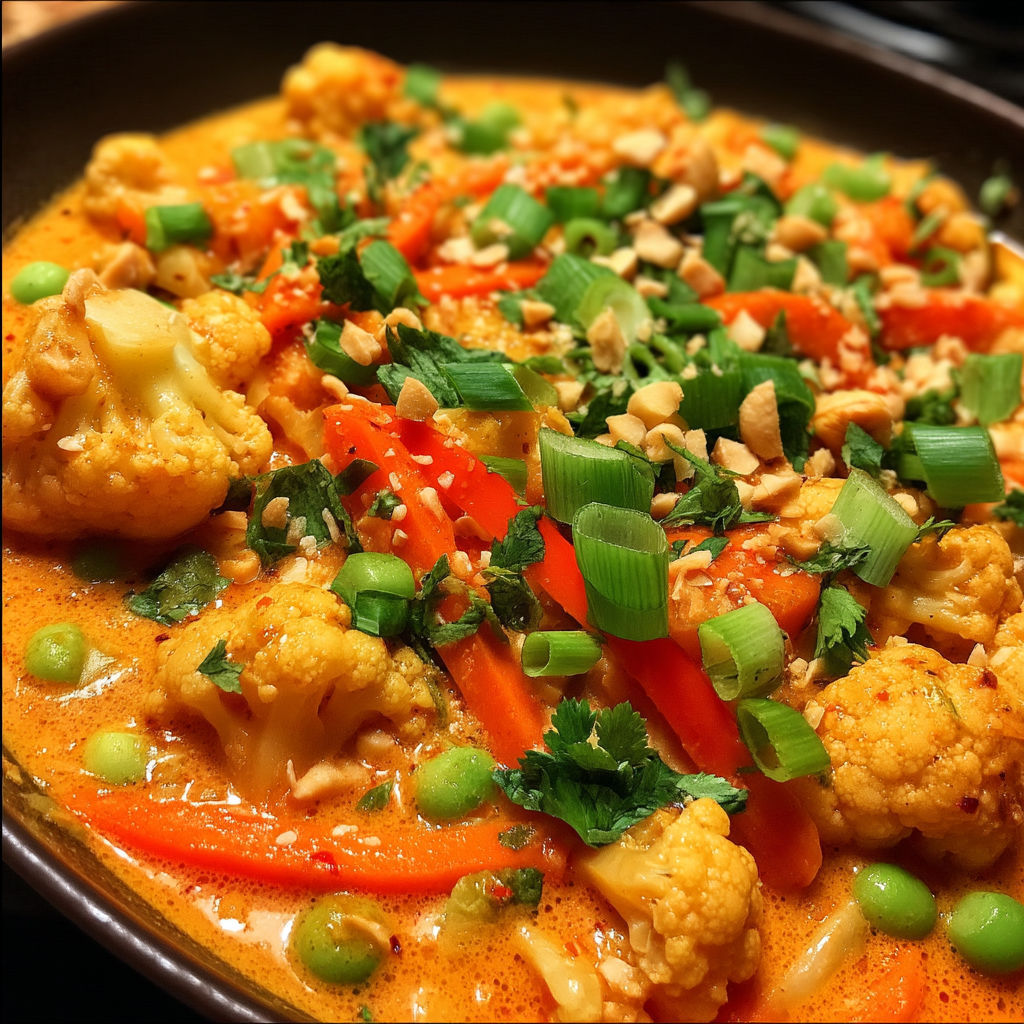
This curry is bright, bold, and endlessly customizable—perfect for sharing or meal prepping ahead. Make it once and you will reach for it whenever you need a plant-based comfort meal packed with flavor.
Recipe FAQs
- → What makes this curry creamy?
The creamy texture comes from coconut milk and natural peanut butter, which create a rich, velvety sauce for the vegetables.
- → Can I use other vegetables besides cauliflower?
Yes, you can substitute or add vegetables like bell peppers, broccoli, or snap peas for more variety and color.
- → How can I adjust the spice level?
Increase or decrease cayenne pepper to suit your taste. For a milder dish, use less curry paste as well.
- → Are canned chickpeas necessary?
No, you can use cooked dried chickpeas or swap for other legumes such as white beans or lentils if preferred.
- → What garnishes pair well with this dish?
Fresh cilantro, sliced green onions, and chopped peanuts or cashews add freshness and crunch to the curry.
- → Is this dish suitable for meal prep?
Yes, it stores well in the fridge and the flavors continue to develop, making it great for advance preparation.