
 Add to Favorites
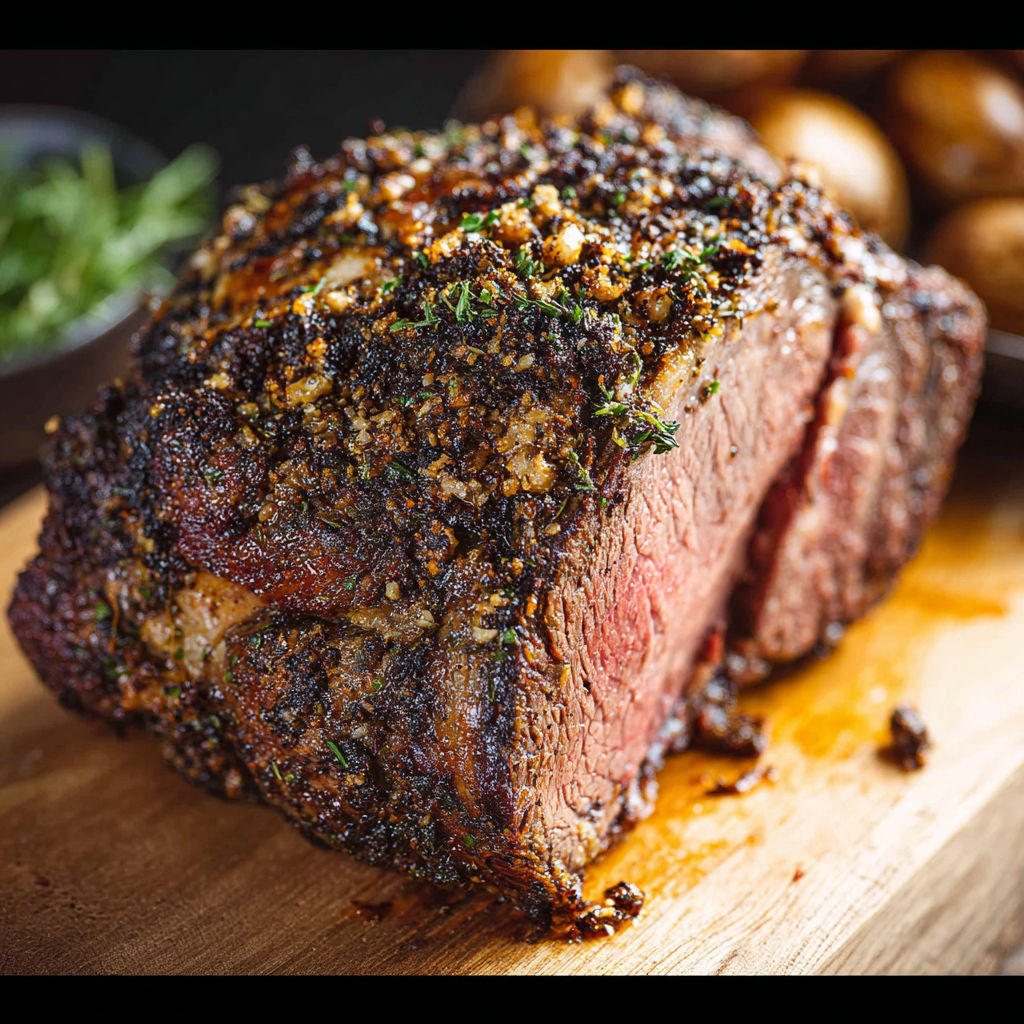
This Butter and Garlic Crusted Prime Rib is my ultimate way to impress a crowd during the holidays or for any celebratory dinner The buttery herbed crust forms a savory blanket over the rich juicy ribeye giving every bite both flavor and tenderness while the entire process feels surprisingly stress free
This is my go to showstopper for Christmas dinner and every year someone new claims it is the best roast beef they have ever tasted Even family members who “do not like red meat” go back for seconds whenever this comes to the table
What You'll Need
- Salt: it is fundamental to building a flavorful crust plus helps draw out moisture from the beef for better browning Look for flaky kosher salt
- Boneless ribeye roast: a prime cut that stays tender when roasted Seek marbling and deep red color for best results
- Butter: softened to easily blend with herbs and cling to the roast Use high quality butter for the richest taste
- Garlic: minced fresh garlic releases a sweet and potent flavor essential for the classic crust
- Rosemary and thyme: fresh herbs bring earthy and piney notes finely chop them to release oils
- Black pepper: freshly cracked adds a bold spiciness Look for peppercorns to grind just before using
- Flour: necessary for thickening your gravy if desired You want a silky smooth texture
- Beef stock: forms the backbone of your rich gravy Opt for low sodium and high quality brands or homemade if available
How to Make It
- Prepare the Roast:
- Place the ribeye roast into your roasting pan with enough space around it for even heat exposure A shallow pan helps air circulate so the crust develops evenly
- Salt and Rest:
- Sprinkle salt all over the exterior Let it rest at room temperature at least thirty minutes This relaxes the meat fibers and encourages even cooking
- Make the Butter Herb Mixture:
- Blend softened butter with the minced garlic chopped rosemary chopped thyme and black pepper Combine until you have a homogenous spread
- Crust the Beef:
- Work the butter mixture evenly over the surface of the roast Press it gently into every crevice so the flavors penetrate deep Once fully covered the herbs should be visible across the whole roast
- Initial High Heat Roast:
- Place the pan in a preheated five hundred degree oven Let it roast uncovered for twenty five minutes This blast of heat starts the browning process
- Slow Finish in Residual Heat:
- Turn off the oven but leave the roast inside undisturbed for two hours Keep the door tightly shut so the heat remains trapped The meat will finish gently while the crust sets Check the internal temperature with a meat thermometer after an hour aiming for your desired doneness
- Rest and Make the Gravy:
- Transfer the finished roast to a carving board Cover loosely with foil and let it rest about twenty minutes This locks in juices Meanwhile pour off the pan drippings into a medium saucepan for gravy
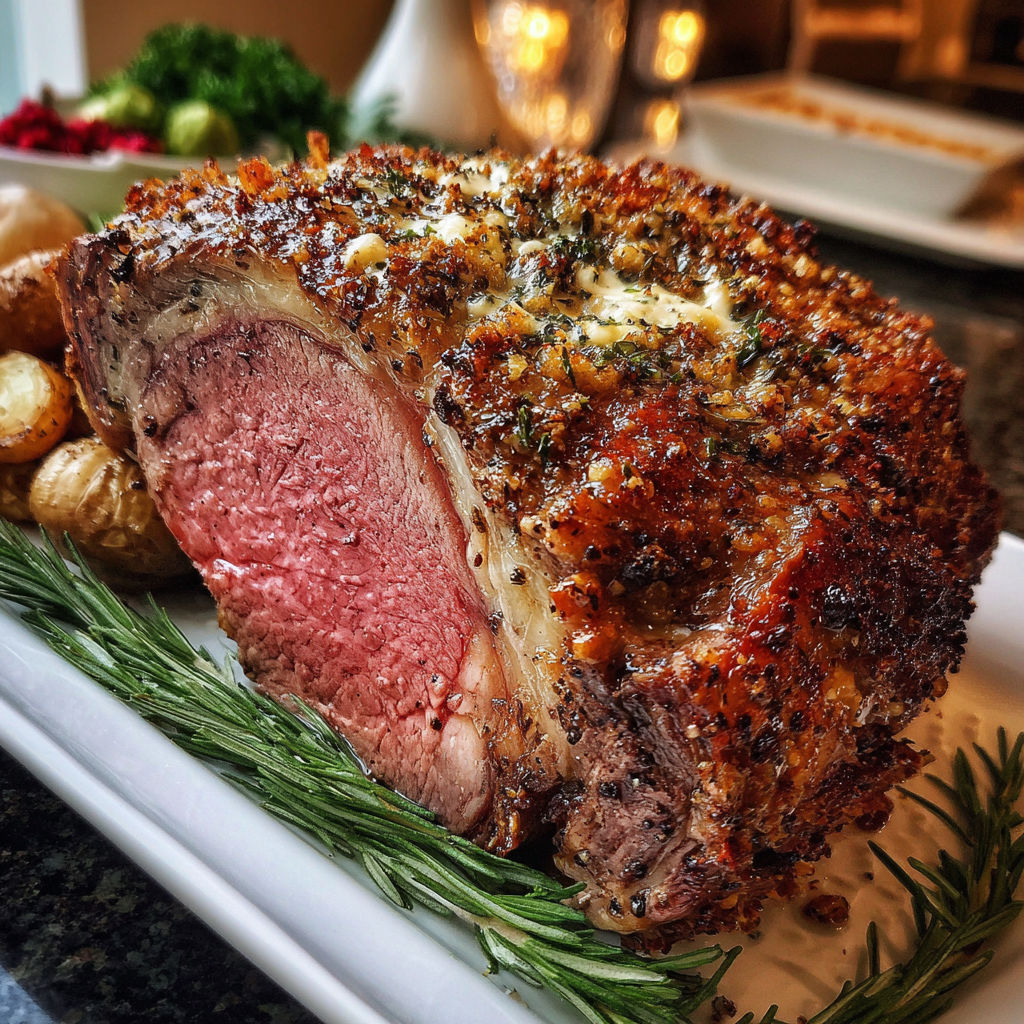
The butter is my favorite part as it melts and mingles with herbs and garlic My fondest memory is my daughter sneaking an end piece while “helping” me carve the roast and declaring it the best thing she ever tasted
Storage Tips
Wrap leftover slices in parchment and store in an airtight container in the fridge The roast will keep well for up to four days Leftover prime rib is delicious warmed gently in a low oven or even tucked into sandwiches
Ingredient Substitutions
If you cannot find fresh rosemary or thyme dried versions can work but use only a third of the amount to avoid an overpowering flavor For the beef stock homemade always tastes the most robust but a carton or concentrate will also work well in the gravy
Serving Suggestions
Prime rib pairs beautifully with classic sides like mashed potatoes roasted Brussels sprouts or a crisp salad For a real treat drizzle the garlic herb pan drippings over each slice Smoky roasted carrots are another favorite pairing at my house
Cultural and Holiday Context
Prime rib has a long history as a festive centerpiece for winter holidays and formal Sunday dinners Its luxurious cut and ease of preparation make it a tradition in many families The buttery garlic crust resembles updated versions of classic British roast beef
Seasonal Adaptations
Fresh herb availability can change throughout the year Adjust with more dried herbs in winter and swap in tarragon or parsley in spring or summer If you want a lighter crust in summer halve the butter and add extra herbs
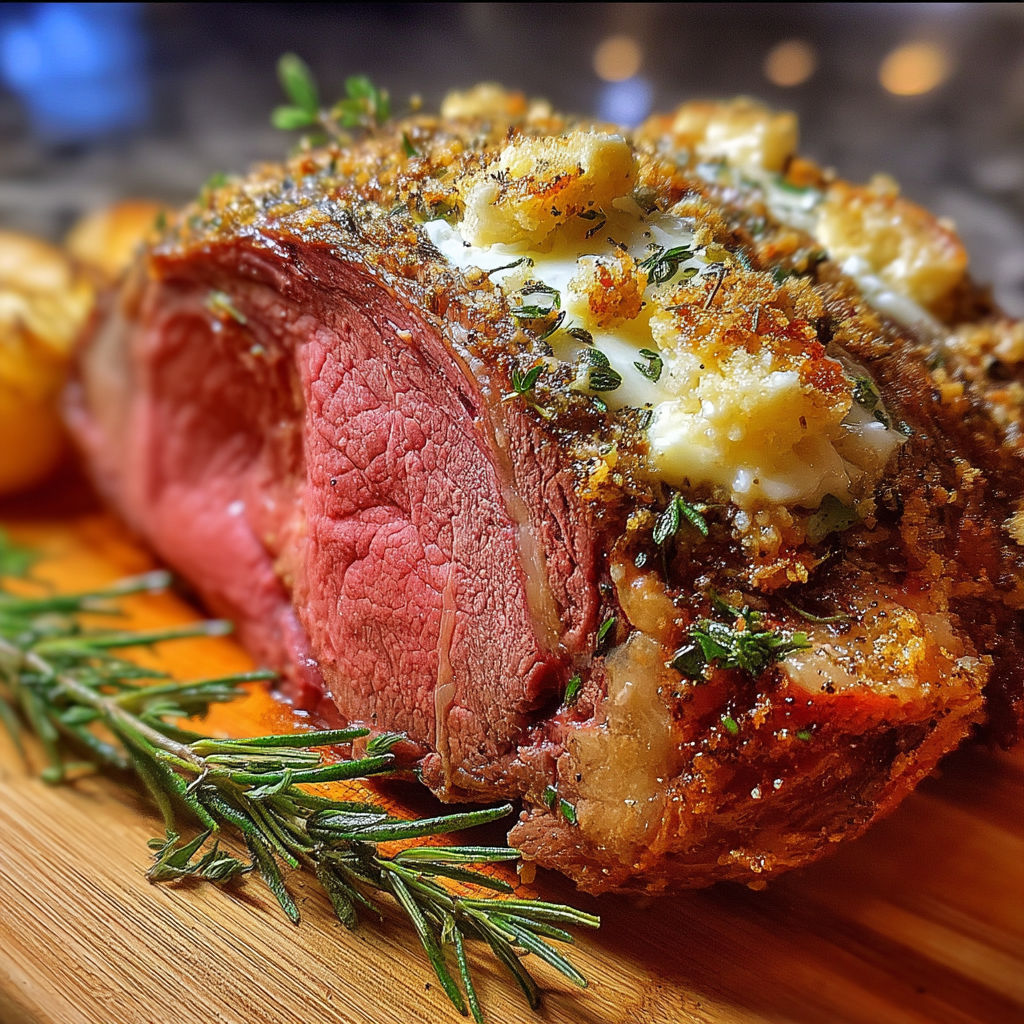
Make sure to let the roast rest after cooking for maximum juiciness
Recipe FAQs
- → How do I achieve a perfect herb crust?
Mix softened butter with fresh garlic, rosemary, and thyme, then spread thoroughly on the roast before roasting at high heat to caramelize the coating.
- → Should I use boneless or bone-in ribeye?
Both work well; boneless is easier to carve, while bone-in can add extra flavor and moisture during roasting.
- → Why is it important for the roast to reach room temperature?
Letting it sit at room temperature ensures more even cooking, preventing a cold center and promoting that rosy-pink finish throughout.
- → How do I know when the prime rib is done?
Use a meat thermometer; aim for an internal temperature of 130-135°F for medium-rare as it will rise slightly during resting.
- → What’s the key to a flavorful gravy?
Use the pan drippings combined with beef stock and a little flour to create a rich, velvety gravy that captures the roast’s full flavor.
- → How long should the meat rest before carving?
Allow it to rest for about 20 minutes after roasting; this helps retain juiciness and makes slicing easier.